Posted on Jul 16, 2015
“We humans have lost the wisdom of genuinely resting and relaxing. We worry too much. We don’t allow our bodies to heal, and we don’t allow our minds and hearts to heal.”
~ Thich Nhat Hanh
This theme or concept of resting has crossed my path a few times and in different ways over the past couple of weeks including Facebook quotes. I think it began when clients didn’t book the days around Canada Day; and I was given a ‘mandatory’ rest of a very lengthy week-end. The following couple of weeks have been lightly booked with clients providing yet more rest. And as a recovering workaholic, this has been the source of some stress. But surprisingly less than usual.
Maybe I am starting to get the hang of this resting and relaxing business. I certainly have not minded the down time to get caught up on reading and my own personal quiet times of reflection…which brings me to the next quote:
“Difficult problems take time to resolve. The more frantically you pick at knots, the more entangled they can become. To untangle yourself try relaxing. Gently and patiently work with your difficulties and in time you will be freed from what now seems impossible.”
~ Bryant McGill
During this time of ‘rest and relaxation,’ I have had opportunity to let go of some persistent worries (such as “Down time is nice, but so is financial security!”) in order for them to work themselves out rather than have me fuss over them getting further entangled and knotted. So it’s been quite the liberating experience to step back, cease worrying, and just be. And hence the third Facebook quote:
“You must let life flow naturally, for life’s secret is patience; you must stop pushing for change and allow things to unfold.”
~Leon Brown
Between mulling over this unprecedented decline in client load (plus what to do about it) and financial responsibilities is plenty of opportunity to relax and just be. Having faith in the “Greater Good/Universe/God/Higher Power/Creator” certainly has helped as well. But it’s one thing to believe in something and quite another to follow through. Here is my opportunity to stop fretting and allow things to unfold.
My body and soul have appreciated the slower pace even if my brain has other (legitimate) concerns. However, faith and experience are teaching me to let go—to uncurl my tightly clenched hands, to relinquish (perceived) control, to quit worrying knots into tangled messes, to step back and be patient, to rest and relax—allowing my body, mind and heart to heal—and to stop all that pushing for change and allow things to unfold.
An image comes to mind of a flower bud slowly unfurling to reveal its full beauty and fragrance. Picking at the petals of the closed bud won’t bring forth an open bloom but will only damage what must emerge with time and patience. This time of unexpected quiet for me is like a bud waiting to open to something even better and more brilliant.
What’s required of me? Patience and faith. For fretting is like picking the petals of the bud trying to force it to open.
May you have the faith and patience to rest and relax knowing things will unfold in their own time and way. You’ll see.
Read More
Posted on Jun 19, 2015
As I begin this, I am not sure what to blog about this month. There are always thoughts percolating in my mind, but nothing has jumped out demanding to be put into writing which leaves me in a bit of a spot. So this may be more a collection of jumbled thoughts than a cohesive entry.
As this quote has been occupying my mind quite a bit lately, I will start with this:
“Sometimes you just have to stop worrying, wondering, and doubting. Have faith that things will work out. Maybe not how you planned, but just how they’re meant to be.”
Some of you know that the past three years have been particularly difficult for me since the loss of my dog, Gracie, in March of 2012.
Her death triggered so much pain to surface—basically any unresolved grief bubbled up, insisting to be dealt with. For the first time, I truly grieved the death of my mother that happened when I turned 5. Along with that came many childhood issues that required attention. Inner child work became standard for me. All aspects of my life came into question and under introspection.
With all that grief to attend to, I have felt a heavy weight upon my soul for the past three years. Until this past week that is. I wish I could articulate the shift, but a shift certainly has taken place. From feeling like the world has been off its axis a degree or two to feeling stable and sure of myself. It’s been quite the shift.
I refer to it as shifting from living in a whisper to living out loud.
That’s quite a switch from “please don’t notice me” to “be all that I can be.”
In a journal entry from earlier this week, I wrote that God wants far more for me than I can even imagine. Not to push or to pressure me, but to live out fully who I’ve been created to be. Not to meet a quota of souls saved, missions accomplished—but to just be me with all my gifts & abilities, joys & sorrows, dreams & disappointments.
In other words: to live out loud.
I’ve tried to hide myself my entire life (for a whole host of reasons but primarily from non-existent self-esteem). I didn’t think I deserved anymore than the pain and suffering that was all around me. What happiness I eked out of life was short-lived, shallow, and results-based—and always with a tinge of sadness to it and/or self-deprecation.
My efforts to retrain my brain apparently are beginning to pay off. I am seeing light at the end of the tunnel, brightness within me, and a new self-appreciation. I can honestly say, I have never before felt good about myself—my accomplishment, certain traits, that sort of thing, but never “just me.” It is such a wonderful feeling.
It feels good to feel good about myself.
It’s certainly been a stormy stretch of sea, but within the current calm waters I can agree:
“Sometimes you just have to stop worrying, wondering, and doubting. Have faith that things will work out. Maybe not how you planned, but just how they’re meant to be.”
May you take a break from the worrying, wondering, and doubting—and just ‘be’ in all your personal brilliance. Shine on!
Read More
Posted on May 17, 2015
“You can’t control everything. Sometimes you just need to relax and have faith that things will work out. Let go a little and just let life happen.”
~Kody Keplinger
This quote has stuck with me since it appeared on the Facebook circuit a few days ago. Let go and let life happen—which involves waiting. I am a terrible “waiter.” At my worst, waiting is fertile ground for anxieties to sprout and proliferate like weeds. At my best, I occupy my mind and body with distractions so the time goes “faster”—or more likely, goes by unnoticed.
Waiting for life to happen feels an awful lot like being stuck. And loss of control. I have come a LONG way in my journey to overcome my control-freak tendency. Where it tends to creep in is during waiting: times when I must relinquish control and trust life to unfold on its own without any assistance from me.
Funny how life is full of paradoxes like that. There are times we must get off our lazy butts, quit complaining, and make life happen. In contrast, there are times we must let life happen in its own time. We can’t hurry periods of gestation. Babies, and other significant moments, occur when they’re good and ready. Premature and delayed arrivals bring their own challenges—some surmountable, others not. But we can’t change or control it.
We must wait: in line; for the bus; for events; for graduation; for promotions; for deals to come through or fall through; for prayers to be answered, hopes to come true; for messages to be sent and received; for people to hurry up; for decisions to be made; for directions, information, or signs from the heavens. Or as Cheryl Richardson words it in her book, Life Makeovers (2000):
“Maybe you’ve been forced to wait because you’re unsure of what’s next, feeling as though your life has fallen victim to a giant hold button.” (p. 93)
There is no end to waiting. But it need not be stagnant. Waiting can be a time of growth (figuratively and literally). It can be a time of inner reflection, of transition, and preparation. Be open to messages from within. Cheryl challenges us to embrace the discomfort of waiting
“knowing that if you use this time wisely, you’ll strengthen your personal power, the kind of power that no outside person or thing can ever give you.” (p. 94)
Grant yourself the freedom to wait knowing it’s a time of growth, reflection, transition, preparation. Sounds like action words to me.
Read More
Posted on Apr 15, 2015
With the spring equinox just past, I read a timely article in the Spirituality & Health magazine (March/April 2015 issue) entitled “The Joy of Spring” by Jane Ganahl. So I am going to piggy back on a few of her ideas for this blog.
She opens her article by talking about fertility celebrations and the science behind the equinox. However, she really grabbed my attention by describing the spring equinox as “a powerful time of regrowth and rebirth” (p. 54) with examples of ancient rituals such as Stonehenge. And it is no coincidence that Easter falls within this time frame (first Sunday after the first full moon after the equinox) or that traditions are reinterpreted from pagan rituals like the Easter egg. Originally egg rituals were “ways of inviting fertility and renewal.” (p. 54)
As a therapist, I am always interested in themes of regrowth, rebirth, and renewal—for that is what my job is really all about: change, growth. And when we can combine the natural environment with our inner worlds, the symbolism can enrich our lives. Formerly empty rituals—even religious ones—can be imbued with ‘new’ or fuller meaning.
For me, I try to see these dreary spring days as expectant with regrowth, rebirth, and renewal. The gray trees symbolize hope of green to come. Tight little buds will unfurl to show forth verdant abundance. The brown earth will release new growth that adds colour to life.
The same can be said for human beings. We may feel drab within our brown and gray environments, but hope is stirring deep within all of us. Here are a few suggestions from Jane to “Put Spring in Your Steps.” (p. 55)
1. Visualize yourself in full bloom: Notice what parts of yourself you’d like to see changed or born. Write one list of things to release and another list of things you’d like to have more of in your life.
2. Connect to natural light: In winter we are deprived of the sun’s healing energies and spend more time with bright screens that disrupt our natural rhythms. With the equinox, we turn the tide on the darkness. On at least one day, witness both sunrise and sunset.
3. Reconnect to the earth: Put your bare feet, hands, and even body on the ground. Breathe in the newness in nature. Plant something.
4. Reboot relationships—or let them go: There are always a few of these in our lives. Examine the source of the discord, and open your heart with compassion. Decide whether the relationship can be saved.
5. Create your altar or shrine to spring: Use elements from nature that inspire you, and colours that resonate with you. Use this space to meditate.
6. Arouse your sensual self: Cuddle, learn tantra, slather your lover and/or yourself in oil.
7. Create your own equinox ritual: Whether it’s dancing, painting, hiking—anything that gives you a feeling of connection and rebirth. And get moving. Winter is over, and it’s time to come alive.
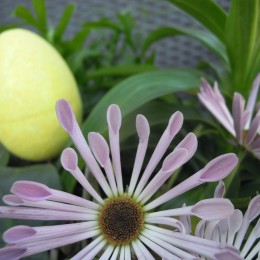
As I type this, I am looking at an indoor plant collection purchased at Costco with symbols such as the Easter Lily and a sparkly, bright yellow (Easter) egg in the centre. A veritable treat for the senses as the lilies exuded a very sensual scent while they were in full bloom, the other flowers are a sight for sore eyes in shades of bright yellow and purple, the dirt feels good to the touch when checking for moistness. Spring flavours were savoured in sweet Easter treats, long since devoured. And I’m listening to a music mix called “In the Summertime” which is sure to pick up my mood on a gray day. Not to mention the cheerful sounds of the birds returning from their time in the south.
May this time of renewal find your verdant Self emerging, ready to show forth the unique beauty and splendour that is you. Release that tight hold on the bud and let your Self unfurl.
Read More
Posted on Mar 15, 2015
Since last month’s blog entry, I have been give opportunities to think about my own positive self-talk—or lack thereof. And specifically what gets in the way. From what I can gather, it all comes down to the concept of shame—which the dictionary defines as “a painful senses of having done something wrong, improper, or immodest.” Synonyms are disgrace and dishonor.
This describes healthy shame when we are actually guilty of wrong doing. But what of the deeper underlying sense of shame-the unhealthy kind—that writes us off as a person? This shame is not limited to a single “bad” or misguided behaviour. This shame is a painful sense of being something wrong, improper, or immodest—of being a disgrace not just behaving dishonourably or disgracefully.
We develop such a sense of shame early on—usually in childhood or adolescence—by the shaming action of another person. The child or youth comes to the conclusion: “There must be something wrong with me; I must be a bad person for this to happen to me.” I had such experiences and conclusions as a child and adolescent—even into young adulthood.
It can carry on indefinitely depending on one’s life circumstances. Shaming is perpetuated by parents toward adult children, spouses, siblings, peers, co-workers, supervisors, managers, teachers, professors, therapists, doctors, church leaders, in fact leaders of any kind. Relationships with a power differential of some sort are especially vulnerable to the practice of shaming.
So early on in my development I internalized that I must be a “bad person”: the only explanation my child-brain could come up with for life’s circumstances. And which was ingrained over the years by shaming messages from a variety of sources. So ingrained that I became expert at shaming myself. No other voice necessary but my own at times.
This healing journey I’ve been on has led me to examine the statement: “I am a good person.” At first, it didn’t fit right at all; but the more I tried it on, the better it felt each time. I was (am) changing the neuronal pathways of my brain. It still needs more wear to become a cozy fit, but I am slowly internalizing that I am good person. And I’m learning the most effective antidote for shaming is a healthy sense of self. Slowly the shaming voices in my head are being silenced.
For I am a good person—even though far from perfect—just like you.
Read More
Posted on Feb 12, 2015
I recently finished reading the book Women Food and God by Geneen Roth (2010). A wonderful book in length and personable writing style. Easy to read and grasp. I like those kinds of books. Books that make me feel welcomed—even when the author is trying to drive home a point that is less than welcome. In this case, points about eating and my struggle with weight.
I’ll admit I have been a comfort eater most of my life. My weight has so frequently gone up and down that my body has the typical marks to show for it. It’s hard not to be judgmental towards oneself—especially with the media messages that women must be a certain size and shape to be attractive and lovable. No woman is immune to that. Even supermodels. Go figure.
And it’s not like I haven’t looked this particular monster in the face before—and won and lost to varying degrees. But Geneen got me thinking. She asked a question that I have switched from the plural ‘they’ to the first person: “If I gained ten pounds, if my arms didn’t look the way I wanted them to look, was I still myself?” (p. 68).
The next page goes on to say: “My body and I are one. There is nothing good about my body and therefore there is nothing good about me.” (p. 69, author’s italics)
These words got me thinking; and I had something of a breakthrough. I have come to realize that I am still me regardless of my size and shape. From my journal entry: “I am still an effective therapist. I am still kind, caring, compassionate, loving, smart, witty, brilliant…with an infectious sense of humour. My core values remain the same regardless of how much extra fat I carry around. And I’ve learned how to dress to hide it—look my best regardless of size.”
Now I don’t normally a) make confessions of this nature in my blog; b) quote myself from my own journal; and c) talk myself up like I did in this journal entry—just in case any of you think I might have a swelled head. 🙂 There, too, shows my disinclination toward positive self-talk. What if I come across as prideful? Or even worse: arrogant!? That just opened a whole other can of worms and content for another blog entry…
But it is challenging to affirm oneself without food if one cannot actually give themselves positive feedback. If I do not know myself for who I truly am, how can I live out loud, so-to-speak? If all I acknowledge are the worst bits about me, the pain, and the suffering, no wonder I am drawn to food to fill the void of where the good bits about me should be and to numb the negative feedback, the pain, and the suffering.
When I am eating, the happy brain chemicals, like dopamine, do their thing; and for that moment, I have a break from the worst bits, the pain, and the suffering. Only to come crashing back to reality. And reinforce the need to eat more to give myself another or a longer break.
Hence the breakthrough. I don’t need food or a better body to live authentically, fully. I can be fully me regardless of cravings, binges, dopamine rushes, and all the rest. I don’t need a different body to be kind and caring—and essentially myself. I do need to start taking care of myself in healthy ways. To be authentic means I must pay attention to the reasons I eat, and give myself the option not to eat, as well as be open to the good bits as well as the less-desirable bits.
All of that to say I am learning to let food be food, weight be weight, and me be me.
Read More