Posted on May 28, 2016
The fire was followed by a period of grieving and then by an incredible lightness, freedom, and mobility.
~Martin Puryear
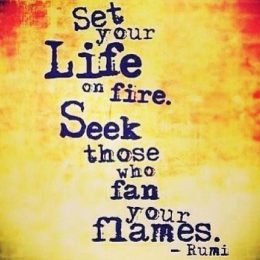
May has been a strange month thus far and doesn’t appear to be changing as the end approaches. It’s been busy and chaotic with one of this month’s themes being fire. Principally wildfires that have devastated parts of Northern Alberta and British Columbia. It is overwhelming to think of the long recovery process, in all its aspects, from basic physical needs to the more complex trauma-related ones.
I also learned this month that my former residence in a neighbouring town had been destroyed by fire and replaced with a new unit. I lived several years in that original mobile home. Practiced my fledgling interior decorator skills on numerous projects. That home was kind of a ‘baby’ to me as well as a created and creative haven.
Many memorable moments happened there as well as personal and professional stepping stones. We had moved to the region so that I could start my Masters studies in counselling. It was the first community my husband and I lived in without nearby family connections. We built up our lives from scratch so-to-speak. Lasting friendships were made, new skills learned, careers evolved.
Now that the home is gone, it is like a symbolic marker of my life has disappeared. There are photos and stories that attest the moments did occur; but somehow there is something missing without the physical structure there anymore.
The irony of the home’s destruction by fire is not lost on me, either, as that has been a primary fear of mine for a long time. The entire time I lived there, I worried about losing everything to fire each time I left the house. In retrospect, it was a very unhealthy, obsessive fear which I no longer suffer from. Not that fire ceases to be a concern, but it no longer consumes me or contributes to obsessive-compulsive thoughts and behaviours. Now that is a relief and source of freedom!
I have never lost anything to fire before, so my fear was not based on experience. It was quite irrational. Loss by fire is so absolute. Not unlike loss by death. As a young child, losing my mother was very absolute and all-encompassing. I lost many tangible and intangible ‘things’ with her death. To lose to fire the life (and its symbolic shell) that I had built was similar to me. It was like losing my anchor.
I have since learned to be more grounded in my sense of self than in things or people. I know I could survive the loss of home, or person, or pet. Experience has taught me it is incredibly difficult, but do-able. As the above quote says, there is a period of grieving followed by release. The grieving is intense. The recovery, fruitful. Growth does follow tragedy.
Fire represents so much. Destruction as well as healing and re-growth. The old is burned away so that new can develop and blossom. Fire is seen as a purification and restoration process. Above all, it is incredibly dangerous and must be respected—whether it be literal or figurative.
How are you handling the fires in your life?
May you experience growth and renewal whatever fires life brings your way.
Read More
Posted on Apr 17, 2016
I read an article this morning about a different way to approach life with nondualism—judging things as neither good nor bad, but just “is.” The article began with an Asian parable about a farmer who lived in rural China hundreds of years ago.
[The farmer] had a son who was the apple of his eye and owned a prize stallion that he treasured. At the end of a long day, the farmer noticed that the gate to his pasture was open and that his stately horse was nowhere to be seen. When the villagers found out that his stallion was missing, they came over one by one and announced their condolences. They said, “Your valuable stallion is gone. Oh, it is so bad!” The farmer answered, “Who knows? Maybe it is, maybe it isn’t.” The people returned to their homes.
The next day the farmer sent his son to search far and wide for the stallion. He found it grazing in a field several miles away with another majestic steed and was able to guide them both back to the farm. The villagers came round again and declared, “You have reclaimed your noble stallion and acquired another beautiful horse to boot! Oh, it is so good!” The farmer answered, “Who knows? Maybe it is, maybe it isn’t.” The people returned to their homes.
The following day when his son was attempting to break in the new horse, it bucked him off and he crashed to the ground, breaking his leg. All the villagers came over and asserted, “That foul beast has broken your son’s leg! Oh, it is so bad!” The farmer answered, “Who knows? Maybe it is, maybe it isn’t.” The people returned to their homes.
As it happens, the emperor’s army entered the village the next day announcing that a war was starting and all of the young men were required to enlist. The farmer’s son could not go because he had a broken leg. The villagers congregated at the farmer’s home once again and proclaimed, “Your son’s leg is broken, so he cannot go to war! Oh, it is so good!” The farmer answered, “Who knows? Maybe it is, maybe it isn’t.” The people returned to their homes. And so it goes…[1]
We have a tendency to label experiences and people as good or bad depending on our levels of pleasure or pain. We reject the one but embrace the other, trying to force the good to stay and the bad to go, putting a lot of energy into manipulating life’s experiences towards only those labelled good. To quote the author,
The truth is that no event or person is inherently good or bad, but rather everything just is; and in this “isness,” there is an opportunity to love. People and events are neutral. The experiences of pleasure and pain do not define the inherent value of events; and the choices that people make do not define their worth…Dualistic thinking sees the world as either/or, setting things in opposition to one another.
Nondualism, on the other hand, allows for experiences and people to be “both/and.” Instead of dividing into groups or categories, unity is possible. Experiences and people can be both good and bad. There is possibility for love and for growth no matter what the label might be of a person or experience. Good can come out of negative situations as seen by the above parable.
However, if we are constantly rejecting “bad” experiences and people while straining to hang onto the “good,” we thwart living fully and completely. We miss out on the “isness” of life. All experiences and people have the potential for good and for bad. It is up to us to alter our perspective so as to embrace unity and neutrality—living with the “both/and” perspective rather than segregating with “either/or.”
This is something for me to think about: how I label experiences and people which only shortchanges me. This is not to say we condone injustice or wrongdoing; but it certainly affects how we approach righting the wrongs of this world. Do we welcome or reject? Do we include or exclude? Do we show love or hatred or apathy? Is there opportunity for growth or risk of stagnation?
May you find love, growth, and fullness by embracing the “isness” of life.
[1] Excerpts from article entitled “Who knows?: On Nondualism and Spiritual Direction” by Andrea “Ani” Vidrine as published in Presence, Vol. 21, No. 3, p. 43-44.
Read More
Posted on Mar 20, 2016
May the blessing of light be on you—
light without and light within.
May the blessed sunlight shine on you
and warm your heart
till it glows like a great peat fire.
~An Old Celtic Blessing
Today, March 20th, is the Spring Equinox or First Day of Spring of 2016. It is also just a few days past St. Patrick’s Day. So the above Celtic Blessing seemed appropriate to me. Celebrating spring with a touch of the Irish.
Spring is oft perceived as the season of new beginnings, new birth, and new growth. Spirits rise with the balmy weather and increased daylight. We are more motivated to make changes this time of year than any other. Some argue that this is the season for making resolutions as opposed to the dead of winter when the New Year rings in. Others consider autumn a new year of sorts with the return to routines of school and work after summer holidays and activities.
For whatever reason, spring has an air of anticipation to it. We look forward to warmer, sunnier days; planting gardens; planning trips; being outside more. All contribute to a closeness with nature and growth. Are we pondering to try new things this spring? To stretch ourselves out of our winter slumber? To improve our quality of life in some way?
Last month I wrote about the death of my maternal grandmother that got me thinking about family and our places within it, connection and a sense of belonging, understanding ourselves in the context of families. I have sorted through some of my childhood experiences and deep-rooted beliefs. Treasuring some, discarding others. Not unlike cleaning out our closets with the changing seasons.
When we change our wardrobes, we welcome back outfits that give us pleasure and still fit! We also have to let go of those items that no longer fit, serve a purpose, or please us. We make decisions to sculpt our ideal body with diet and exercise—often thinking back to a previous size or hoping for a different size and shape in the future. Sometimes we succumb to discouragement in our desires for the perfect wardrobe, body, life.
It is also beneficial to clear out our minds. A mental spring cleaning. Do we make time for quiet reflection to accomplish this goal? Do we pay attention to the internal clutter? Allow ourselves to sense the inner shifting and bring it forward into daily life? Or do we rush around, distracting ourselves with busy-ness, ignoring our interior world?
Maybe the mental spring cleaning is too scary. We fear bringing our innermost thoughts and feelings into the light. We don’t want to face what doesn’t fit anymore. There is comfort in the familiar after all. But just as the spring weather warms the earth generating new life from the sleeping ground, so too we must cast light upon our inner world to encourage growth or we risk rot and stagnation.
We must face the thoughts that help us and those that hinder us. And make adjustments as necessary. It certainly is a long process, not accomplished over night. It requires persistence, patience, and courage. For me, it also requires stepping into the light: embracing all that I am and want to be. Looking closely at what needs to change, what needs to grow, what needs to be let go, what needs acceptance. Risk leaving my comfort zone.
What about you? Are you ready for spring? For growth and renewal?
May the Light be upon you as you trust the process and boldly go forth into this new season.
Read More