Posted on Sep 10, 2020
Last month, I received the news that my former canine therapy
assistant, Elsa, died of intestinal cancer. This was a hard blow for a number of
reasons. One is that I had been thinking of her as she reached her tenth birthday—the
senior years in a dog’s short life—wondering if she was showing her age yet,
that sort of thing. Another is that I learned of her death via indirect
channels—which triggered dormant “divorce trauma.” Third is the bond she and I
had. I have missed that girl greatly. She was not only my office assistant, but
also my “therapist with four legs and fur.”
I’ve blogged about her in the past.
http://www.thewindingpath.ca/july-2012-inner-alpha/
http://www.thewindingpath.ca/october-2012-alpha-update/
http://www.thewindingpath.ca/april-2014-a-dog-story/
http://www.thewindingpath.ca/december-2014-winter-solstice/ http://www.thewindingpath.ca/january-2015-crazy-life-fresh-starts/ http://www.thewindingpath.ca/january-2019-fail-forward/
Mostly dealing with anxiety—hers and mine. We taught each other a lot. And she proved to be incredibly empathetic. A natural therapy assistant—instinctively knowing what each client needed—snuggle, kiss, curl up at their feet, keep a safe distance or a watchful eye. She knew the art of “just being” in the moment and of “just being there” for someone.
It’s also a strange experience grieving the death of a pet that you already lost in a divorce. I had not seen Elsa for 3 years; yet the news of her death hit hard. I think it was the finality of never seeing her again. There must have been a part of me that held out hope for one more visit. A strange silver lining to this finality is that it also slams shut the door on my marriage. I was about to write “failed” marriage; but to me that is inaccurate. While the marriage did not last until “death do us part,” I do not perceive it as a failure. It is by far more a success story that I kept working at it for 20 years.
I see it along the lines of a completed marriage. It served
its purpose. Its time had come. If I were to remain, it would have continued to
steal my soul until I was an empty shell, going through the motions. Elsa
played a significant role in those last 5 years. I think she preserved my life,
protecting me from the complete loss of my Self. Her behaviour issues demanded
I stay in the present and face my own. This is not to diminish the role played
by many concerned friends who witnessed my demise long before it surfaced in my
consciousness. However, the “daily-ness” of dealing with Elsa held me
accountable—I could not bury my head in the sand.
My first attempts at leaving the marriage all centered
around Elsa. I hoped to stay nearby to have “shared custody” as she was such a significant
part of my life and profession. However, in the end, I had to sacrifice that
bond for my Being. She could not be the defining factor in my preparations. It
also meant living with unknowns. I had no idea how my ex-husband would cope
with her behaviour issues on a daily basis. In my heart-of-hearts, I assumed he
would give up and ask that I take her. This was not the case. Somehow he
learned to manage; and she, by all accounts, continued to thrive.
As have I.
It has been a gong-show year for most of us. Yet we all hang
in there somehow. I have come a long way in the last 3 years—even if my life appears
in disarray at the moment with numerous projects on hold: partially painted
bathroom, tarp on my roof for winter, broken tooth, paused fence construction, persnickety
stove, and the latest—snow blower in need of repair before winter.
But if life with Elsa taught me anything, it was to live in the moment, always be curious, cherish the ones you love, be there for others, and deal with it when “life happens”—even if you’re learning new ways of doing that. And never take for granted the kind souls you meet along the way who make the journey worthwhile.
Read More
Posted on Jul 31, 2020
As evidenced by the absence of blog entries, I haven’t written much lately. Not even in my personal journal, which had me puzzled. In the “real world” of writers, it is common practice that one must write at least something every day. It’s certainly not for lack of pondering. And I wouldn’t label it as writer’s block. More along the lines of missing motivation than inspiration. Reluctantly, I admit to moments of losing interest in the idea of maintaining a regular blog. I don’t know how daily or even weekly bloggers do it.
I love words. Always have. I enjoy the actual process of
playing with combinations of words to create just the right nuance or picture.
I appreciate the power of words—to uplift, encourage, challenge, inspire, heal,
connect, engage, interact; but most of all, the ability to make sense of the
senseless. The healing power of meaning can only be conveyed via words.
Many weeks ago, I made an attempt at writing a blog entry to
“use my words” to process anger I was experiencing at the time. This proved
helpful and produced a seed or nugget for a future blog. I even liked what I
wrote at the time; but instead of pursuing that line of thinking, it is time to
unpack this supposed “writer’s block.” After mulling it over for quite some
time, the reason finally occurred to me: survival mode.
For quite some time now I have been in “survival mode.” Not
the kind that lands a person on a survival skills TV show—although some would likely
challenge that assumption living in an ongoing renovation project—but the psychological
kind that engulfs a person in a shroud of self-preservation stifling creativity
and spontaneity. However, I didn’t recognize it as survival mode. I was
sheltered, fed, clothed. All the essentials. Finances are tight; but somehow I
am staying afloat—or as I like to say, keeping the wolves from the door. I have
never been healthier (all things considered). My mental health is in check.
So what was I surviving? Turns out my mental health may not
have been as stable as I was leading myself to believe. I went into survival
mode because the normal routines that keep me sane were being challenged daily.
I am no longer a neat-, clean-, or control-freak. I can live with more
ambiguity than ever before. However, my house was in limbo for several months waiting for its electrical
upgrade to be completed. Wires hanging about. Fixtures waiting to be homed.
Opened cavities in my walls.
Two things I remain terrible at handling: waiting and
disorganization. With my actual house in a state of disarray: Paperwork piled
up; Messes piled up; Dust piled up. I couldn’t properly clean anything. Objects
couldn’t be put back in their places. My house (and life) was in a state of
limbo. And for the most part, I was powerless to make anything happen not being
an electrician and circumstances being beyond my control. So my two Achilles
heels combined into kryptonite (mixed metaphor, I know). I was forced to wait
in an environment of disorganization.
The cornerstone of mental health is maintaining routines. I
was barely managing to keep up with the basics, so some things fell by the
wayside. I am slowly returning to my full morning and bedtime routines with
positive results. And my house is inching its way back to habitable. I am once
again feeling the creative juices flowing—whether writing or making home
improvements. Structural cavities have been filled, primer and paint are
gradually making their way to my walls.
So I do find it interesting that survival mode does not mean
lack of productivity. Many projects have been completed in the past few months.
My home and yard are continually evolving into my own little paradise and
sanctuary. But living in a state of chaos does impact my sense of self and
well-being. My brain focuses on the practical, day-to-day stuff only. Part of
me shuts down as it were. My mind can’t relax and wander where it will. My
spirit retreats to safety—waiting for the imposed disorganization to pass.
Survival mode.
Interestingly, recently I spoke to someone about waiting—which
in retrospect clarifies my survival mode. Waiting is generally associated with anticipation
and excitement—or annoyance and frustration. But for those of us with traumatic
childhoods, waiting is linked to danger: waiting for the other shoe to drop;
for the mood to change; for the blow to hit; for the storm to pass. Our brains need
to be retrained to the many nuances of waiting—not just danger.
Hence, in the framework of waiting equaling danger, it makes
sense that my brain entered survival or shut-down mode. Even though it was
innocuous waiting—for the electrician to be done and my house to return to being
my sanctuary—my brain didn’t know the difference. It just knew we were waiting.
And waiting means impending danger. To make matters worse, I could not rely
upon my usual “go to” to self-soothe: organization; amplifying the angst attached
to waiting. Now that this is part of my consciousness, I can work on retraining
my brain and its associations with waiting. Maybe next time my life is
surrounded by chaos, I will be able to self-soothe more effectively and not
enter survival mode. The healing journey continues.
As you continue on your own journey, here are some questions
to consider: What is your kryptonite that sends you into survival mode? What does
it look like when you shut down? What negative associations hinder your ability
to self-soothe? What changes need to be made to your framework?
Read More
Posted on Mar 17, 2020
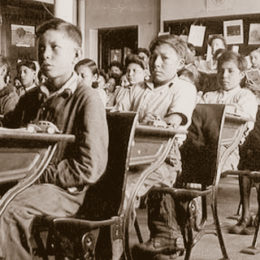
While the world is distracted by Covid 19, I have been mulling over the idea of rebuilding (heads up, this is going to be a long rant!). Not my home—that I am renovating, not rebuilding, thank goodness! Recently, I watched an interview that impelled me to share my thoughts on a controversial topic: Truth & Reconciliation for indigenous Canadians. The interviewee, Tanya Talaga, proposes a more accurate word to reconciliation is rebuilding. I concur. There is nothing to reconcile between two unequal partners. The goal of colonization was obliteration—not collaboration. And it nearly succeeded. However, what remains are empty shells of once proud and soulful members of many nations.
It reminds me of the Holocaust. There are similarities
between how Hitler and John A MacDonald tried to destroy not only a group of
people, but a rich and vibrant culture and its various communities as well. A
difference between the first prime minister of Canada and the leader of the
Third Reich is dramatic impact. MacDonald (and other early politicians) managed
a subtle, invasive, insidious, genocide that masqueraded as colonization for
the good of the people of Canada. But which people? The ones who welcomed or
invaded? The betrayal, deceit, and trickery used by Canadian government officials
and politicians are abhorrent and would never be tolerated today.
In fact, they would be considered war crimes. Yet the general populace is tremendously dismissive of the indigenous situation. I was raised on the same platitudes and blame-the-victim attitude. Hence, countering ignorance is key. We are inundated with books, movies, documentaries about the atrocities of WWII. There is no denying it happened; that it was horrid and wrong on so many levels. The world has, for the most part, taken ownership of WWII and made efforts to prevent a repeat. We can’t imagine how it happened in the first place and are incredulous that there is a viable threat of it happening again.However, history has repeatedly proven that it does repeat itself. We have seen it in countries on all continents at various points in recorded history—dynasties in China; tribal wars in Africa; the British, Russian, and Roman Empires; Spanish conquests. Since the dawn of time, rulers have invaded countries, conquered its inhabitants, decimated cultures (Polynesian Islands, Celts, Aztecs, Mayans, to name a few). Enlightenment appears to have a short shelf life.
Which, in trauma terms, begs the question: how to break the
pattern of abuse? Throwing money at the problem is another version of sweeping
“it” under the rug (aka “hush money”). But that is not in the true spirit of
“reconciliation.” Reconciliation implies restoration—that ship sailed with the
first broken treaty and scurvy-infested Hudson Bay blanket.
In therapeutic aims, to restore a broken relationship
requires all parties taking ownership of what they contributed to the situation
and what they bring to the table moving forward. New terms of the relationship
are negotiated. If all parties do not benefit in mutually satisfying ways, then
someone sacrifices for the sake of the relationship, the relationship shifts
(usually a downgrade) to factor in discrepancies, or it disintegrates.
So far, the Canadian government holds the power and calls
the shots. It is by no means a mutually satisfying relationship, and separation
or disintegration is not an option. Hence Canada’s indigenous peoples are
forced into making the sacrifices and downgrading the relationship. None of us
would have the privilege of living in this amazing country if it wasn’t for the
original inhabitants welcoming the intruders and showing them the ropes of how
to survive and thrive. Those who take the position of the “conquering hero,”
speak from the colonization point of view—not the conquered—as history
generally is written from the conquerors perspective. How arrogant to assume all
is fair in war—or accurate in historic accounts.
When what happened 150-200 years ago occurs today, people
flee, become refugees, seek asylum. Where are indigenous Canadians supposed to
go? It is absurd to think that the country within which modern refugees seek
shelter historically created the very environment that forces others out. More
ludicrous is the fact that Canada doesn’t own its dark secret. The difference
from WWII: Hitler and his henchmen couldn’t hide from recorded reality while Canada
hides its dark secret in obscure archives.
My goals with this rant are two-fold: highlight the
atrocities (ownership) and consider rebuilding from a trauma recovery
perspective. In the spirit of taking ownership, here are a smattering of
inhuman government policies (refer to websites end of page): denied women
status of any kind (Indian or otherwise); forcefully removed children from their families to attend residential
schools with the primary intent “to kill the Indian in the child”; segregated
onto reserves (similar to Jewish ghettos); renamed individuals with European
names (more cultural distancing); restricted from leaving reserve without permission
from Indian Agent (characteristically of ill repute, dictatorial, and
sadist—not unlike plantation “slave supervisors”); forbade speaking their
native language, practicing their traditional religion; declared potlatch and
other cultural ceremonies illegal; denied the right to vote.
“I have reason to
believe that the agents as a whole … are doing all they can, by refusing food
until the Indians are on the verge of starvation, to reduce the expense,” Macdonald
told the House of Commons in 1882
“The great aim of our legislation has been to do
away with the tribal system and assimilate the Indian people in all respects
with the other inhabitants of the Dominion as speedily as they are fit to
change.” – John
A Macdonald, 1887
Impact of said policies—generations of indigenous Canadians “lost in the system.” We learn how to raise children living in families. If you remove children from their families, how are they to learn how to raise the next generation? Their models are punitive, dismissive, and distant institutions. Many of us spend years in therapy for being raised in punitive, dismissive, and/or distant families. Imagine whole communities and cultures!
So if the government is serious about rebuilding its
indigenous roots (doubtful given political patterns), step one would be to own
the damage it has done to the fabric of families—damage in terms of parenting
and attachment issues which lead to unhealthy coping strategies (in any
cultural background) such as violence and addictions—which Canada as a whole
denies it helped to create and perpetuate.
The second step is developing a strategy—not a vague plan—a
strategy with measurable goals and objectives. Clean drinking water for EVERY
Canadian would be a great start! Access to equal education and health care.
Trauma recovery programs led by local community members. Proper homes,
facilities, and infrastructures. All of this cannot be a “top down” approach.
Collaboration is key—all parties having a voice at the discussion table—starting
from the “ground up.”
Another framework for understanding our predicament from the trauma recovery perspective is to think of what’s involved leaving an abusive relationship. “Canada” (as we know it) abused its original occupants —and continues to abuse with unfair policies and treatment. Not because it doesn’t know better, but willfully and initially maliciously. However, as the victimized partner in this abusive relationship, our indigenous peoples have nowhere to go, no one to turn to. As in domestic violence, there are bystanders—those who see the abuse but turn away or blame the victim. As apathetic bystanders, we join the ranks of those who witnessed the systematic destruction of Jews by the Nazi regime. We are in collusion with the abuser when we don’t speak up due to apathy or passivity. That, too, is hard to own.
Imagine you are the abused partner and believe (re-enforced
through experience) you have no one to turn to—what would happen? Most likely,
you turn on yourself. The violence turns inwards. Depression and futility set
in. You lose your sense of self, your autonomy, your volition, your will to
live. Your spirit dies a little more each day. To cope with the negative
onslaught, you must shut down. Your entered this relationship in good faith.
Now faith is gone. Can you imagine being beaten down every day? How do you
press on? Move forward? Rebuild when each attempt is thwarted?
Providing we aren’t forced to leave under drastic measures,
rebuilding a sense of self germinates while still in the abusive relationship.
We begin to see “this” isn’t working and eventually realize our own spirit or
essence will die if we stay or continue “as is.” We timidly begin reaching out
to others, determining who can be trusted, seeking confirmation of our unfathomable
experience. With their help—and ONLY with the help of trusted others—plans
formulate to make change: either to begin a new life of recovery or to begin
rebuilding the foundation for a healthier relationship that fosters mutual
respect.
If Canada embarks on this recovery mission, it needs to collaborate with the First Nations to incorporate from within—not impose upon from the abusive party. Can you imagine being offered supposed help from the same system that terrorized, denigrated, suppressed, and trampled you? There is NO easy fix to this situation. But until we take ownership of how we all play a part (either passively or aggressively) in this toxic relationship, it will never have a hope to heal. At the very least, we must stop negative speech towards once mighty nations, communities and cultures, individuals, and a situation we know nothing about. Until we are brave enough to engage with the real people involved and learn of their lived experience, adding our voice to the multitude of naysayers is not helpful, but harmful.
Before becoming a trauma therapist, I was one of those turn-a-blind-eye/blame-the-victim Canadians. I can’t anymore. How about you?
- https://www.ictinc.ca/blog/21-things-you-may-not-have-known-about-the-indian-act-
- https://thecanadianencyclopedia.ca/en/article/indian-act-plain-language-summary
- https://indigenousfoundations.arts.ubc.ca/the_indian_act/
- https://www.nwac.ca/wp-content/uploads/2018/04/The-Indian-Act-Said-WHAT-pdf-1.pdf
- https://nationalpost.com/news/canada/here-is-what-sir-john-a-macdonald-did-to-indigenous-people
- https://www.ictinc.ca/indian-residential-schools
- https://indigenousfoundations.arts.ubc.ca/the_residential_school_system/
Read More